GEAR
Home metal 3D printing: from $3,500
Printing metal at home is no longer a slogan — it is a set of choices. Prices run from $3,500 to well over $100,000, and different technologies sit in between. Comparing them as "metal printers" leads to the wrong conclusion.
Based on reports and manufacturer material published October–November 2026. Prices are as announced; crowdfunding prices differ from retail.
1. "Metal" is four different things
| Route | What it does | Home? | Price |
|---|---|---|---|
| Metal-filled filament | Plastic with metal powder. Looks like metal | Yes (any FDM) | Hundreds of dollars |
| Bound metal (BMD) | Metal powder + binder → debind → sinter | Conditional | ~$100k |
| LPBF (laser) | Laser melts metal powder directly | Rarely | $25k and up |
| New desktop (SCS) | Metal + scaffold powder, sintered inside | Early stage | $3,500 (campaign) |
The first one is not metal. It feels and weighs like metal, but strength and heat resistance are plastic. Most "my metal printer isn't magnetic" complaints come from here.
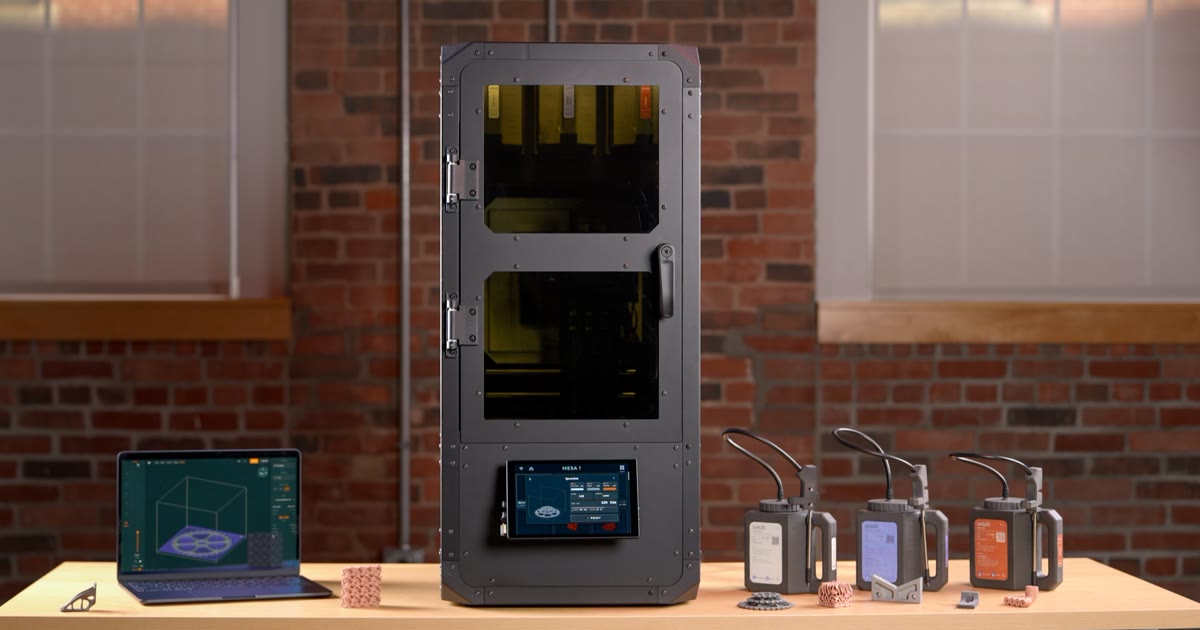
2. $3,500 — Studio 3e8 Mesa 1
Revealed 28 October, launching on Kickstarter 1 December from $3,500.
- No laser, no binder — metal and scaffold powders deposited in layers
- Built-in sintering furnace — no external furnace, gas or vacuum
- No support removal — the scaffold holds the shape, then is poured away
- First metals — carbon steel and copper, standard 120 V outlet
- Crucibles — 50×50×85 / 75×75×85 / 100×100×85 mm
- Time — 24–48 hours including sintering, up to 72 hours for the largest parts
The engineering is clever: it removes both the debind/sinter chain of bound metal and the powder handling of LPBF.
What is not disclosed
- Scaffold composition and whether it can be reused
- Layer thickness, tolerances, achievable density
- How shrinkage compensation is calculated
- Retail price (the $3,500 is an early-bird tier)
Crowdfunded hardware carries delivery and support risk. Desktop metal campaigns have failed to reach users before.
3. Around $5,000 — SnowPod, desktop laser
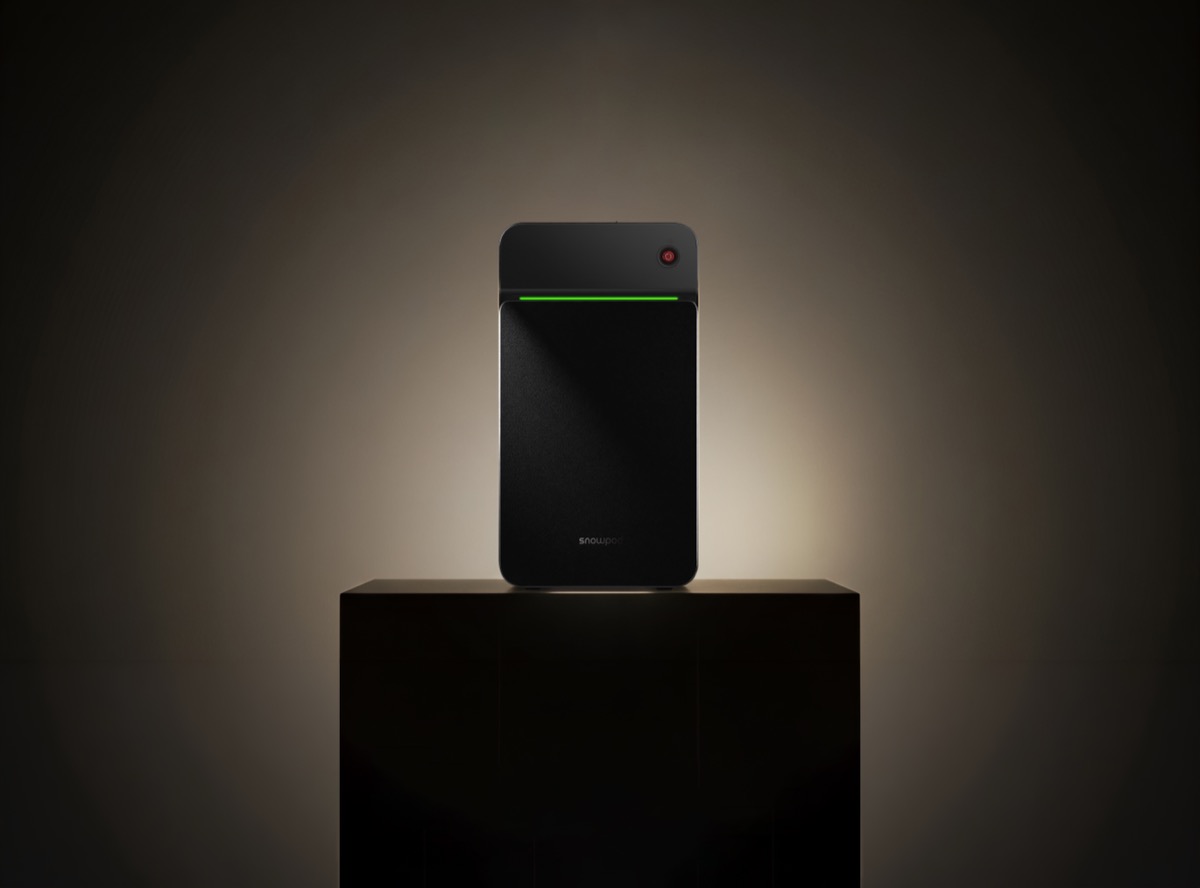
Where the Mesa 1 sinters, SnowX's SnowPod melts metal with a laser (L-PBF). It is the "real melting, on a desk" route.
| Process | L-PBF (laser powder bed fusion) |
| Material | 316L stainless steel |
| Body | 360×360×660 mm |
| Laser | 40 µm spot · 700 W · 100–240 V |
| Price | $5,299 (MSRP $9,299) with NitroPod $5,899 (MSRP $9,999) |
| Build volume | Not disclosed |
Twice the price of the Mesa 1, but a different process: sintering holds powder in shape, while the laser melts each layer. Denser parts and more materials, at the cost of stricter conditions.
Where "desktop" breaks down: SnowPod needs NitroPod, a nitrogen generator that separates N₂ from ambient air. Add fine powder handling, 700 W power and exhaust management.
SnowX has shipped a desktop metal printer before, and very few people used it. Weigh that alongside the Kickstarter status.
4. Around $25,000 — budget LPBF
- Matrix SLM120D — $24,888–28,800, 300/500 W laser, dental and lab use
- Scrap 1 — $14,200 DIY kit, $17,990 assembled, 200 W laser, 100 mm build, 316L
Those prices are the machine. Running one adds a powder sieve, drying oven, heat-treat furnace and nitrogen generator. The purchase price and the cost per part are different numbers.
5. Around $100,000 — bound metal
- Markforged Metal X — $99,500 printer, $165,000–180,000 with wash and sinter
- Desktop Metal Studio System 2 — roughly $110,000–120,000
- Raise3D MetalFuse — $150,000+ complete
Still a three-stage workflow, but with validated materials and support. If you need a real part, this is still the answer.
6. Realistic ladder at home
| Goal | Method | Budget |
|---|---|---|
| Metal look | Metal-filled filament on FDM | $200–400 |
| Real metal, small runs | Filament print + outsourced sintering | $1,000–2,500 |
| Sinter in house | FDM + lab furnace | $5,000–10,000 |
| Desktop laser | SnowPod + nitrogen generator | $7,000+ |
| Production parts | BMD or LPBF | $25,000+ |
Step two is the pragmatic one: shape it yourself, outsource the sintering.
7. Why metal is hard — three reasons
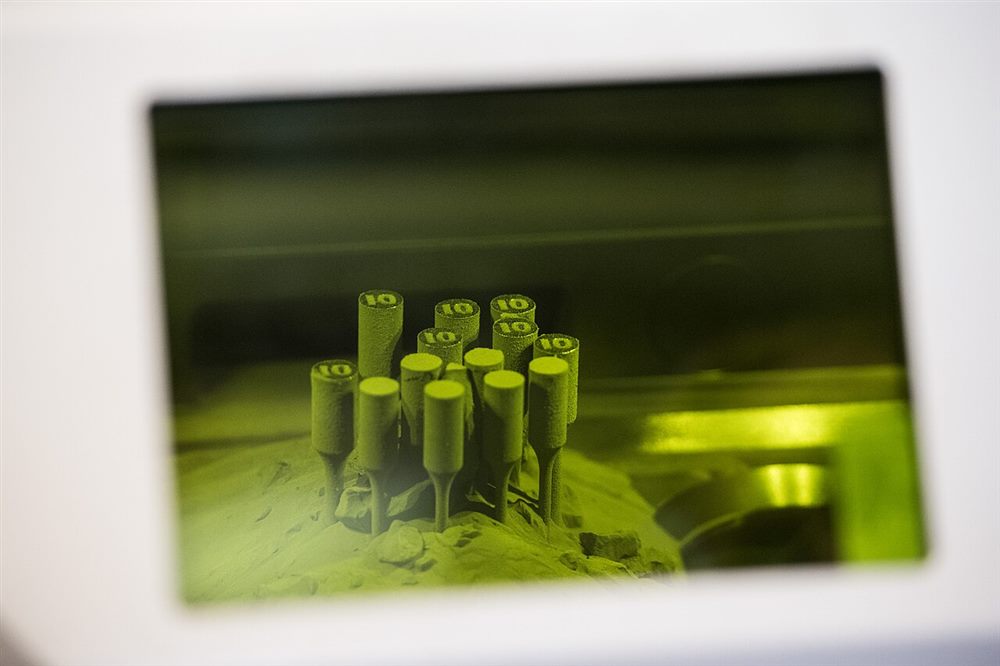
① Shrinkage. Sintering shrinks the part — reported at 15–20% depending on material. Without compensation every dimension drifts. Industrial systems reach 99%+ density; that gap is where "home" and "industrial" separate.
② Powder safety. Fine metal powder is a fire, explosion and inhalation risk. Sealed cartridges (as on the Mesa 1) exist to make this manageable.
③ Post-processing. Support removal, polishing, heat treatment, inspection. Often longer than the print.
8. Our view
Interpretation from here.
- Home metal in 2026 is still early — direction is right, validation data is thin.
- If you need one or two parts, outsource. A service bureau beats buying hardware.
- For business use, BMD remains the safe choice.
- For hobbyists, metal filament is a reasonable start — as long as you know it is not metal.
9. Checklist before buying
- Density and tolerance — "metal part" alone is not a spec
- Shrinkage compensation — automatic or manual
- Sintering — internal or external, gas or vacuum needed
- Powder handling — sealed cartridges or open powder
- Gas and power — nitrogen supply and a 700 W-class circuit
- Scaffold/support — reusable, and how much waste
- Retail price and support — do not decide on campaign pricing
Summary
Metal printers are cheaper, but that is not the same as usable at home. A $3,500 machine tests that boundary; a $100,000 machine sits outside it. If you need one or two metal parts, price the job at a service first.
Sources
- 3D Printing Industry — Studio 3e8 (30 Oct 2026)
- Studio 3e8 — Mesa 1 FAQ
- AM Insight Asia — Mesa 1 (29 Oct 2026)
- 3Dnatives — Scrap Labs (8 Oct 2026)
- MTX Laser — metal printers for home (Apr 2026)
- Images: Studio 3e8 (Mesa 1) · René Volfík / Wikimedia Commons (CC BY-SA 4.0)